College
College Football Has a Patience Problem, and UTEP and Sam Houston Are Paying the Price
Coaches are being asked to win faster than ever, even at programs without the resources to compete financially. UTEP and Sam Houston can't afford to make the same mistakes with their next hires.
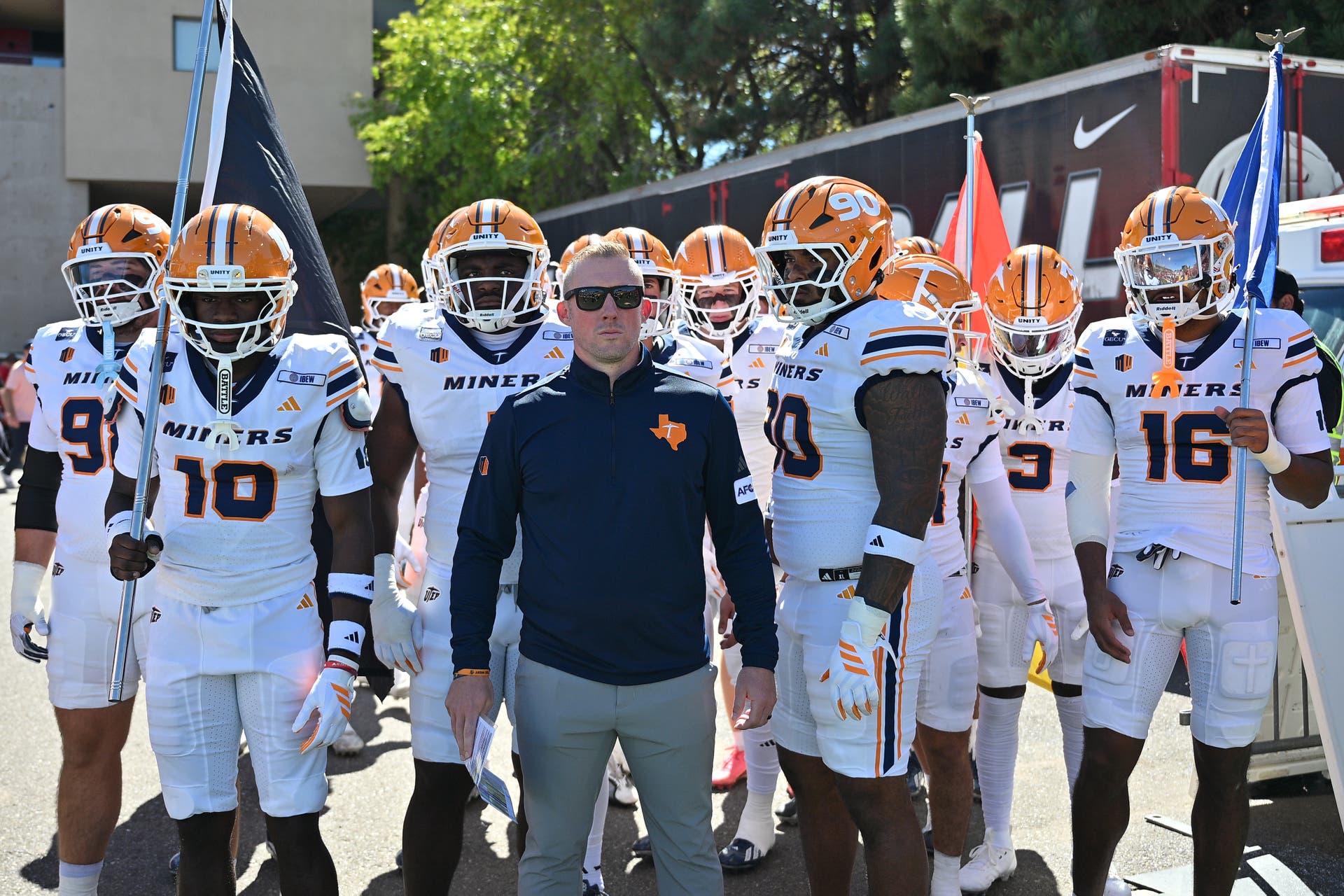
Patience was never a pillar of college football. And as more of the financial burden is passed to donors and fans because of NIL and revenue share, what little patience existed for head coaches in college football has disappeared.
The days of getting four years or more to build a program into a winner are over, even at the toughest jobs in the FBS ranks. Sam Houston gave Phil Longo 20 games. Scotty Walden didn’t even make it to the end of Year 3.
The last time a head coach at UTEP didn’t make it to 35 games before being fired was Gil Bartosh, who led the Miners from 1974-76. Ironically, he was canned with the exact same 6-28 record as Walden. At Sam Houston, the last coach to not make it to Year 3 because of performance was Allen Boren, who went 7-14 from 1972-1973.
Social media doesn’t help, either. TCU fans are publicly calling for Sonny Dykes to lose his job four years after he led the Horned Frogs to a national championship. He remains the only head coach in the Big 12 to win a College Football Playoff game. There are Aggies who loudly want Mike Elko relieved of his duties less than 12 months after he led Texas A&M to its first trip to the CFP.
“The money donors are calling the shots more than ever because they can simply tell the athletic director or president that they’re no longer donating, and with no money for the roster, that coach is a dead man walking,” one sitting head coach in Texas told Dave Campbell’s Texas Football. “That’s what happened to Mike Norvell at Florida State. I bet Baylor suddenly has more money for the next roster than they did for Dave (Aranda) the last two seasons.”
Curt Cignetti at Indiana and Bob Chesney at UCLA, as well as guys like Will Stein at Kentucky, changed the calculus for fans. As has the possible roster turnover enabled by the transfer portal. Look no further than Denton where first-year head coach Neal Brown has the Mean Green in American Conference contention despite signing 72 new players in his first offseason.
UTEP and Sam Houston entered the job market in the same year and those schools will likely interview many of the same candidates. Some of the names that have popped up for potential replacements have already voiced concerns privately about how long they’d get to turn those programs around.
If you fired one coach after 20 games, what makes the next one believe he’ll get much longer than that if things don’t go well right away?
“UTEP has, what, like five winning seasons this century? They move into the Mountain West, which is much tougher than Conference USA and Scotty (Walden) doesn’t even get two full years to figure it out in a new conference,” an assistant coach in the G6 told us. “The resources don’t match the expectations.”
Coaches at big money schools like Texas, Texas A&M, and Texas Tech understandably have a shorter leash because there is enough money for quick fixes. That isn’t true in the G6, especially at Sam Houston and UTEP. It should be noted, however, that Longo wasn’t just fired for his on-field record. Sources at Sam Houston say there was a toxic environment within the team and the coaching staff that simply wasn’t sustainable.
So, if UTEP and Sam Houston are competing in the same coaching pool, which job is better? The salaries for Walden and Longo were in the same ballpark, which makes sense because UTEP was in Conference USA alongside Sam Houston when Walden was hired. But that is no longer true.
UTEP’s advantage is conference affiliation. The Miners don’t get a full share of the TV revenue inside the conference yet, but that starts in 2028 and is expected to be worth around $3.5 million. Compare that to Sam Houston in Conference USA, which reportedly receives somewhere between $700,000 to $800,000. The operating budget in football for the Miners was around $12.7 million this year, compared to $10 million or so for the Bearkats.
Sam Houston’s advantage is location. El Paso is a great city, arguably the best big city in Texas, but not from a proximity to FBS talent standpoint. Draw a 45-mile radius around El Paso and you’ll likely find a few dozen players a year who can win you games at the FBS level. Do the same in Huntsville and you’ll find hundreds. And with the portal, one of the main sells is bringing kids back home. Huntsville is less than an hour away from Houston, one of the five biggest hotbeds for college football talent in America.
Current leadership is also a factor. Sam Houston is under a transition with long-time athletic director Bobby Williams set to leave his post after the 2026-27 school year. As for UTEP, ask any Miner fan in your life how much confidence they have in current athletic director Jim Senter, who is about to hire his third coach since 2017. The previous two – Walden and Dana Dimel – went a combined 26-77.
Both are arguably among the toughest jobs in the FBS. But that doesn’t mean the right coach can figure it out. Jerry Kill won at New Mexico State. K.C. Keeler won 10 games in his last year at Sam Houston. Jason Eck had New Mexico on the brink of a CFP berth. Fans at those schools shouldn’t resign themselves to misery, but the next coaches hired there need more time to cook or the food will keep tasting the same.
Even with the portal and revenue sharing, coaches at the G6 level should generally be afforded four years to build a program. The responsibility for winning doesn’t stop at the head coach’s office. Texas State is a perfect example. Sure, G.J. Kinne’s hire helped the Bobcats get over the hump and into annual bowl eligibility, but that isn’t possible without the competence of university president Kelly Damphousse and athletic director Don Coryell. It all works together, even if it is the head coach that ends up on the chopping block.
Patience doesn’t mean unlimited job security. Longo had turned Sam Houston into a mess behind the scenes and the on-field performance wasn’t good enough to overlook that. Walden’s Miners were 1-19 against the FBS since 2025 and his best year was in 2024, his first on the job. Fans were justified in calling for both guys to be fired.
But UTEP and Sam Houston aren’t Indiana or UCLA or even North Texas. There are legitimate roadblocks in the way for instant success and if those programs want to become consistent winners, it starts with more than asking the head coach to win right away.