High School
At Chisholm Trail, a Record-Setting Quarterback Battles Leukemia
A month after setting a Chisholm Trail Rangers record with 402 passing yards in one game, senior quarterback Keaton Rose battles Leukemia and inspires a community.
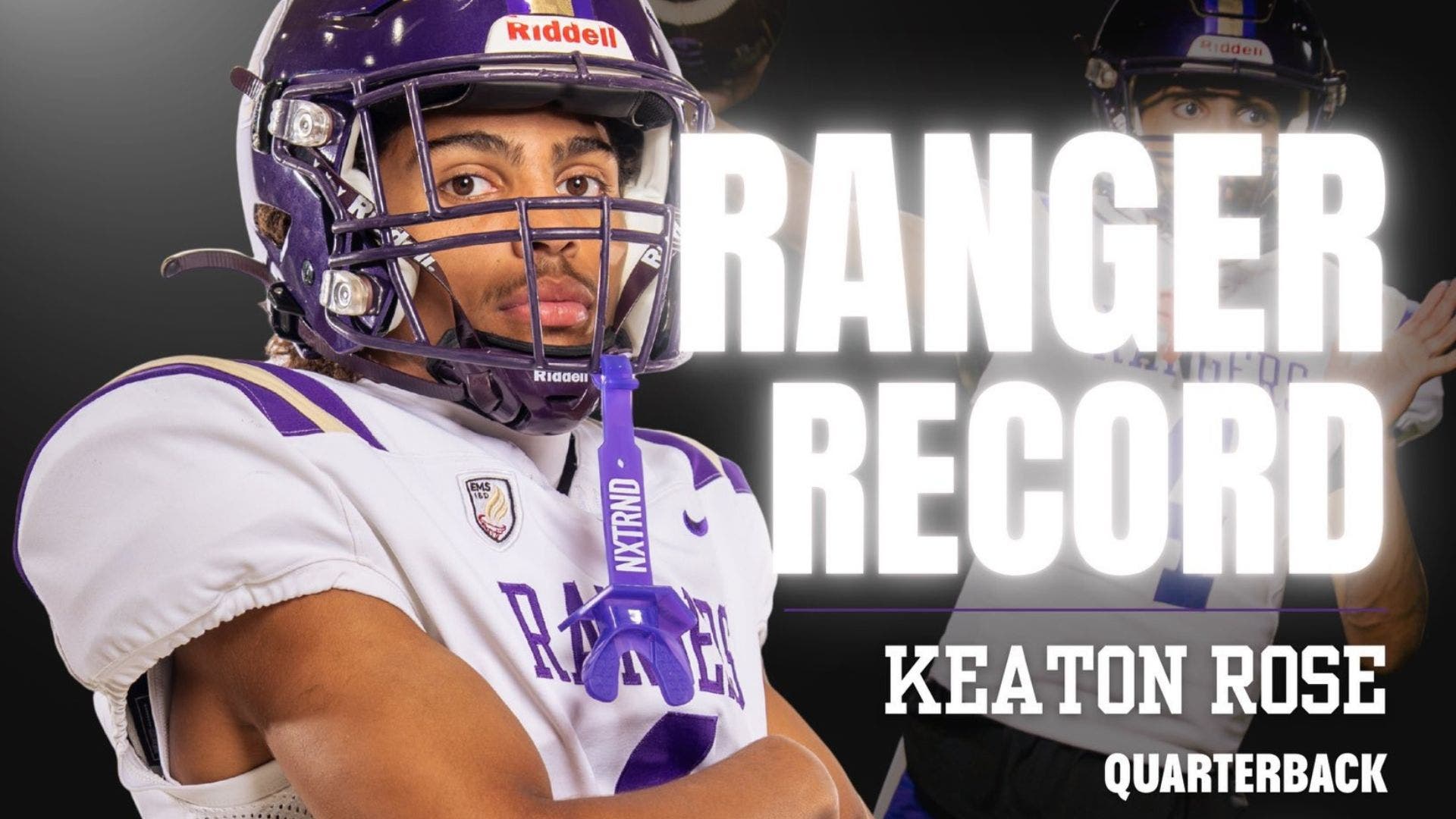
Keaton Rose first fell in love with football, and more specifically, the idea of being a quarterback, at a summer camp hosted by Dallas Cowboys franchise star Dak Prescott in elementary school.
To Keaton, there was an important distinction between being a football player and being the quarterback. Playing football was something you did, but being the quarterback said something about who you were. Because while a rocket arm and quick feet were prerequisites to play, what you needed most to be a quarterback was in between your ears and inside your chest. You needed to be a leader, a motivator, a grinder, and a team spokesman. You had to be the best of the best.
At the end of the session, every camper got to take home a Dak Prescott poster. The bottom had space for all the kids to write their ultimate goal. Keaton thought for a moment, remembering how he and all the kids from around the Metroplex had gawked when Prescott introduced himself to the crowd. He decided then and there that he wanted kids to look at him like that too, one day.
“I want to be a famous quarterback.”
Keaton Rose is now a senior quarterback at Fort Worth Chisholm Trail High School. That poster still hangs in his bedroom. Except, after a multi-week stay at Cook Children’s Hospital, he hasn’t seen it in a while. But this week, he’ll return home, look at that poster, and realize he became everything he ever wanted to be, just not the way he thought.
Because Keaton thought he’d become a famous quarterback when he set a Chisholm Trail single-season record with 23 touchdown passes as a junior. Then, he believed he had surely reached the mark after setting a single-game record with 402 passing yards against Wichita Falls Memorial in Week 4 of his senior season. And a couple of weeks later, after his diagnosis, he was certain: setting a single-game passing yards record while playing with Chronic Myelogenous Leukemia, a blood cancer, definitely made him a famous quarterback.
But he would be wrong. Over multiple weeks in the hospital, his mother, Mary, has kept a daily log of every call, text, or visitor, because there are too many people to remember in her head. Chisholm Trail head coach Marvin Nash and his team have been up to the hospital every day, 10 to 15 people deep. None of his teammates are making that commitment because Keaton threw for a lot of yards. They’re visiting him because he’s their leader. Through his character and commitment to the team, he became the famous quarterback he dreamed of long ago.
“All of our players have been to visit him,” Nash said. “He’s probably the most popular person over at Cook Children’s right now, because we’re there every day.”
That poster, with those words about being a famous quarterback scrawled in his elementary-aged handwriting, used to be the first thing Keaton saw when he woke up at 4:00 a.m. every day, a standard he continued to hold himself accountable to every time he wanted to stay in bed. When Marvin Nash became the Chisholm Trail head coach in July 2025, all the team workouts shifted to the early morning. Nash expected the kids would need an adjustment period, especially since he’d arrived so late in the offseason. Most of them did. But when Nash would arrive at the fieldhouse at 4:30 a.m., Keaton was always sitting against the wall by the front door, waiting to be let in.
“When we first started practicing, I noticed that the only people beating me to the office every day was my offensive coordinator (Mike Collins) and Keaton Rose,” Nash said.
That season, Keaton set the program’s single-season touchdown-pass record, leading Chisholm Trail to its first-ever back-to-back playoff appearance in school history. Keaton was always a strong, lean quarterback at 180 pounds. But, that offseason, he attacked the weight room program, hoping to get even sturdier for his senior season and a potential college football career.
Around February, however, Keaton’s lifts plateaued. Then, he actually started losing weight. At first, the physical change wasn’t noticeable to Nash, who saw him every day. But after a month, he was certain Keaton was getting skinnier. Maybe he never would’ve noticed it if Keaton’s weight loss wasn’t also accompanied by a loss of drive.
“His whole demeanor was changing,” Nash said. “He’s not the same kid who was beating everybody into the facility.”
Keaton’s mother, Mary, also saw him sapped of his usual infectious energy. By the time Keaton got home from the school day, all he wanted was to lie on the couch and sleep. It didn’t matter that the sun was still beaming through the living room window. Mary took him to a doctor to see if he had depression. When the doctor cleared him, she chalked it up to Keaton truly being tired. Football practices were extremely early. Or, maybe, he was just being a normal 17-year-old.
But there were signs that Keaton’s lethargy was spilling into other areas of his life. In the spring, he stopped turning in multiple school assignments, collecting zeros that threatened to fail him. Noticing the slip, Chisholm Trail assistant academic principal Meredith Birdwell called Keaton out of class and took him on a walk to the football field. Together, they sat in the stands and looked down at the field. Then, Birdwell led him to the field and had him look up at the stands.
“It’s your choice where you watch the game from next year,” Birdwell said.
Birdwell set up weekly Friday meetings to check Keaton’s progress, following up with Mary after every appointment. Mary considers Birdwell a Godsend. At a school with over 2,200 students, most assistant principals wouldn’t have even noticed Keaton’s decline, much less set up check-ins. Especially because no one could’ve ever foreseen undiagnosed blood cancer was the cause.
“He had no drive or energy,” Mary said. “I would’ve never thought it was anything like this, but I can see now he was giving everything he had to football, and didn’t have anything else to give.”
Heading into his senior year, Keaton still held a firm grasp on his quarterbacking duties, even as his school and social life slipped through his fingers. He was still a team leader, but he wasn’t the same person. Keaton was still a hard worker, but the joy that used to bubble above the surface was zapped.
In Week 3 against Arlington Seguin, Keaton scrambled for a first down and took a helmet to the knee as he scurried out of bounds. Keaton didn’t register the pain at first and finished the game, leading the Rangers’ offense to 50 points. But after the win, his knee ached. By Monday’s practice, he was limping. His lower thigh was throbbing, hampering his movement. Postgame soreness usually wore off by this point, but Keaton’s pain was only getting stronger. The strangest part was that his leg wasn’t bruising up. But the trainers told him this wasn’t uncommon with deep thigh bruises, since the injury can be far below the skin.
Coach Nash and his offensive coordinator, Mike Collins, wanted to hold Keaton out of that week’s game against Wichita Falls Memorial. He hadn’t practiced all week, and they feared he wouldn’t be able to scramble and protect himself. But Keaton begged and begged. Finally, Coach Nash relented. Get the ball out fast, he said.
Keaton broke a school record with 402 yards.
But in the week after the record-shattering performance, Keaton’s leg only stiffened. By the district opener against Azle, there was no question about whether or not he could play. He missed the Azle game, the entire bye week, and the following game against Denton High.
By Week 8 against Sherman, he’d finally gained enough leg flexibility to be cleared by a doctor. His first practice back was Monday, October 12. But as he warmed up with a game of catch, Collins, the offensive coordinator, noticed Keaton was pale and sweating. It looked like he had the flu. Collins told Keaton to go see the athletic trainer. After taking vitals, the training staff saw Keaton’s resting heart rate was elevated, and his oxygen levels were low. The trainer pulled Keaton’s helmet and called his mom, telling her Keaton couldn’t practice until a doctor cleared him.
That night, Keaton and Mary went to the pediatrician for blood work. All day Tuesday, Mary refreshed her phone, hoping the doctor would bring good news that her son could play against Sherman. At that point, missing another football game felt like a crushing blow.
The doctor’s office called Mary at 4:30 a.m. on Wednesday morning. Mary, of course, missed the call. She and Keaton were both awake, about to go to football practice. Keaton was still the first one in the building, even if he couldn’t play. She just thought it was an automated message, one of those ‘Please rate your visit’ calls. The doctor’s office didn’t even open until 8:00 a.m. But after the ringer went to voicemail, she saw the transcript unfold on her home screen.
“Please call back. We have critical labs,” it read.
When Mary called back, the doctor told her Keaton’s labs showed an abnormally high white blood cell count.
By 9:45 a.m., Keaton and Mary were back at the doctor’s office. The doctor called Mary back into a consultation room and left Keaton on the table. Mary, a nurse, knew from experience that the doctors didn’t bring you into a consultation room for good news.
The doctor showed Mary some of Keaton’s lab work. White blood cells fight infections within the body. A normal range is between 4,000 and 11,000. His white blood cell count was over 204,000. Platelets, which stick together to form clots, are normally between 150,000 and 400,000 range. Keaton had 1,000. His hemoglobin and uric acid numbers were also abnormal, and his spleen was enlarged.
All of these signs pointed to cancer.
“My heart shattered,” Mary said. “This was my baby. My football-loving boy. My quarterback. My son who had been working so hard to get back on the field. And now, at just 17 years old, he was facing a cancer diagnosis.”
Coach Nash walked the field, his mind consumed with the game plan for Sherman, when Keaton texted him a sentence that dropped him to his knee on the turf.
“Coach, I have a form of leukemia,” Keaton wrote.
In those first moments after they heard the news, Mary in the consultation room and Coach Nash on the field, both rifled through their mental filing cabinet of every day they’d seen Keaton in the past year, wondering why they hadn’t been able to diagnose him themselves. But blood work is the only way to determine cancer, not losing a couple of pounds or abnormal sleepiness. Especially when Keaton had broken a school passing record three weeks before.
“She and I felt equal guilt,” Nash said. “She felt mom guilt, and I felt coach guilt. Why didn’t we see this earlier? But there’s no way we could have. There’s no way either of us could’ve guessed this.”
Nash says breaking the news to the team was one of the hardest moments of his career. Chisholm Trail’s 2026 team was extremely close, even before Keaton’s diagnosis. They’re the first class to clinch three consecutive playoff series in program history. In many ways, these Rangers have laid the foundation for what the Chisholm Trail can become.
“Our team is the family you choose,” Nash said. “We choose to get up here at 5:00 a.m. every morning and meet by position, then get on the practice field by 5:45 a.m. It’s a conscious choice, and it’s because we love each other.”
The Chisholm Trail team also made a choice to visit Keaton in the hospital every day since the diagnosis. For Nash, his team’s response shows why high school sports are so important. Nash was a good football player growing up who lived with a single mother. When he was 15 years old, his mother was diagnosed with cancer. By the grace of God, she beat cancer twice and is still with us today. But that news could’ve unmoored a young Nash, ripping him away from his team. Instead, his coaches kept him focused, and he graduated from Austin College after a distinguished football career.
“They chose to make me one of their sons – to help me be able to find my calling,” Nash said. “Now, I’ll be there and help any kid in need. There’s always this gap that needs to be bridged, and somebody has to fill it. I think Texas high school coaches do that better than anybody.”
The Chisholm Trail team spends most of their time in the team room on the oncology floor, playing video games and talking trash. But, mostly, they give Keaton the sense of normalcy he’s longing for. That’s part of why he’s smiled more in the last two weeks than he did in the eight months before. The other part is because, strangely, the cancer diagnosis has brought him a sense of relief.
“I think he’s been feeling so bad for so long,” Mary said. “And people have been saying, ‘Get up, you need to do something,’ and he didn’t know what was wrong with him or why he was feeling that way. Now he has answers. It’s almost like it was a relief, like, ‘I’m not crazy.’”
Coach Nash says that Keaton is back to being the same kid who used to wait for him to unlock the field house door at 4:30 a.m. Now he’s battling cancer with the same determination he has brought to his football career. But, just like a football team surrounds the quarterback, a community surrounds Keaton in his fight against cancer.
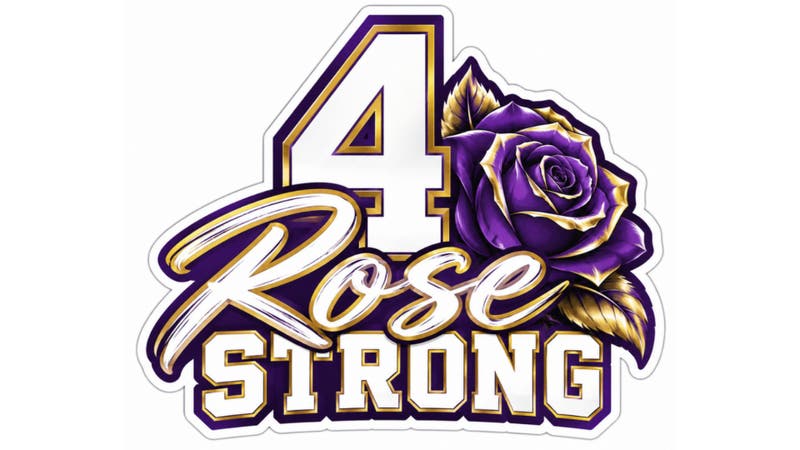
Chisholm Trail High School made decals for the back of their football helmets that read ‘Rose Strong’ with Keaton’s number 4. But every team in the Saginaw-Eagle Mountain School District has adopted them, too. Before last week’s game against arch rival Saginaw, head coach Mike DeWitt called Nash to tell him his school was praying for Keaton. Prayer is the most important thing, but unbeknownst to Nash, Saginaw was doing much more than praying.
When Nash walked out for pregame warm-ups, he saw all the Saginaw players, coaches, cheerleaders, drill team dancers, and even school principals wearing “Rose Strong” shirts.
“I had to walk back in the locker room for a second,” Nash said. “You’re supposed to dislike your rival the most. But everything you see is so much bigger than ball.”
Keaton Rose may or may not play football the rest of the season. He has to wait until his spleen returns to a normal size. But whether or not he plays another snap in a Chisholm Trail uniform, he’s become the famous quarterback he always aspired to be. Except his story is so much bigger than ball.
You can donate to Keaton Rose's GoFundMe here.