High School
This Isn't Hollywood. It's Avery Lawson's Fight Back to Football
After leukemia stole his junior season, Jefferson High School WR Avery Lawson faced a fight far bigger than football. His road back to the field is anything but a Hollywood story. It's better.
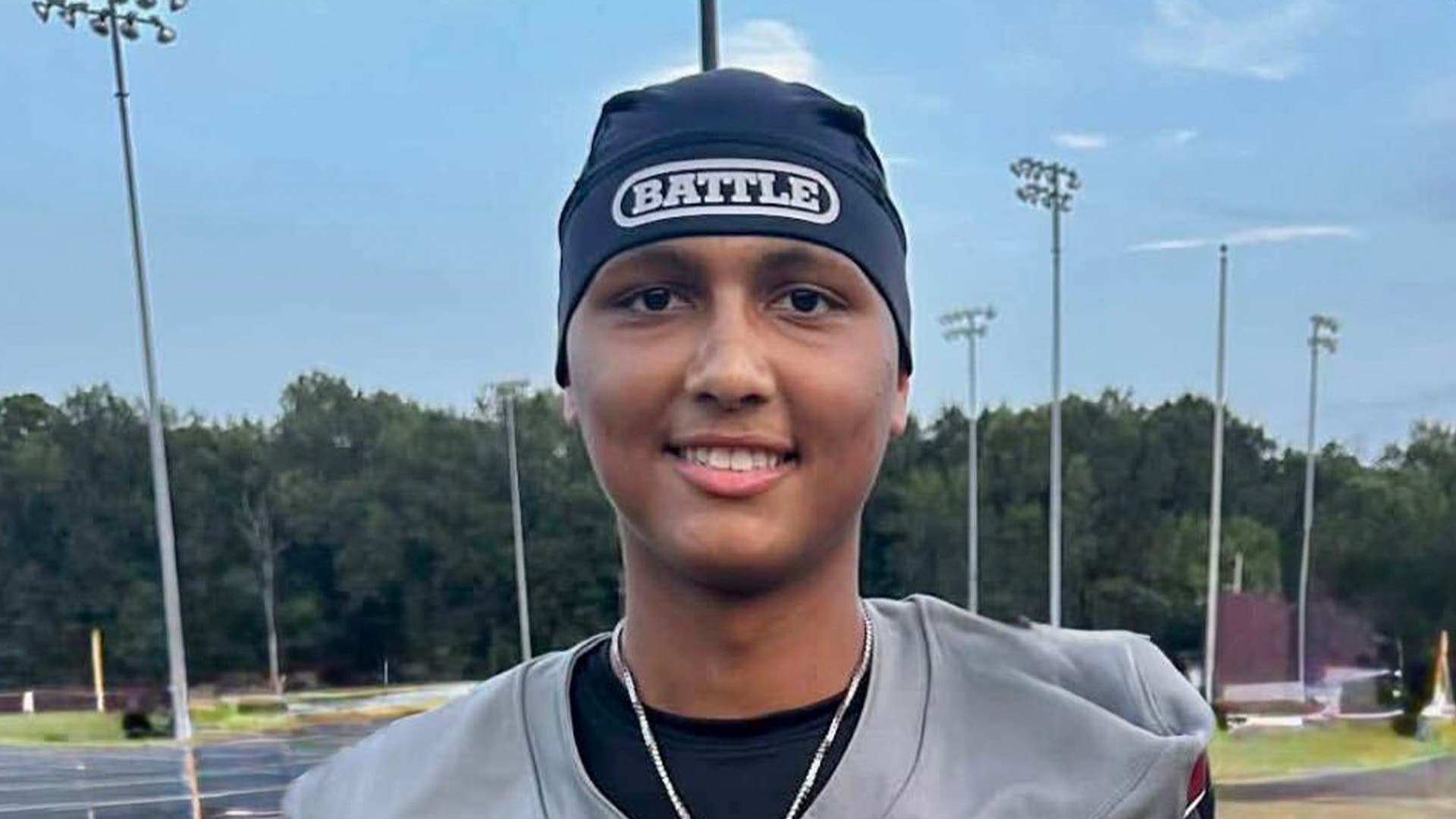
On that late afternoon of August 27, 2025, as Avery Lawson cruised down the street blasting his favorite R&B music, hurtling toward Jefferson High School’s football stadium, it felt like he was driving into the best year of his life.
Everything was coming together, the puzzle pieces of his football career snapping into perfect place. He was a reigning All-District player. He was moving to his favorite position, wide receiver. He was one of 23 juniors on Jefferson’s team, all of them best friends who’d dominated from Little League to middle school. They’d never lost a game; the hype around their group grew with each win, creating a palpable buzz around football-crazed Jefferson, Texas, about how special this season could be. Dave Campbell’s Texas Football magazine had just named the Bulldogs the No. 4-ranked team in the state.
So Avery headed to Jefferson’s JV scrimmage, ready to ring in the new year. Then, his mom called. He needed to turn around and come to his grandparents’ house.
When he got to the house, the first sign something was wrong was his mother’s red eyes. It looked like she’d been crying, but he couldn’t really tell. So he grabbed a plate of food and sat on the back porch with the family, making small talk, wondering why everyone was being so weird. Then his father pulled up, and his parents and grandparents gathered around him. Avery got a sinking feeling in his stomach.
“When they sat me down, I was like, ‘Aw, man, they're gonna tell me I gotta take a few games off,’” Avery said.
Avery had dreaded this conversation. Because lingering beneath all the positive momentum in his life was a feeling he’d tried to shove aside and outwork, but he could no longer ignore. Avery was exhausted, and had been for a couple of months. Not like the normal fatigue that comes from summer strength and conditioning, or being the normal teenage boy burning the candle at both ends, either. When he worked out, he felt dizzy, and his vision blurred. It felt like he could never catch his breath, whether during wind sprints or in the middle of the night, when he’d wake up to soaked sheets and have to change out of his drenched pajamas.
That week, the doctors had run a bunch of tests and told him he was getting over COVID. But his mother, Cassie, worked the night shift as a Med-Surg nurse. When she looked at his labs over the doctor’s shoulder, she saw his platelet count was extremely low. She’d felt something was wrong. She’d taken him in for a second opinion, not knowing whether her alarm came from a mother’s or a nurse’s intuition, or maybe God.
When they told him the new test results were back, the worst-case scenario Avery was that his junior season would be paused. Instead, his mother told him he had Acute Lymphoblastic Leukemia. His junior season was over, and if they didn’t drive to Dallas instantly, something far more precious could be over, too.
In a fog, with everyone’s words echoing around him, Avery packed a bag for a 10-day stay. Then, he and his father, Cordell, drove to get his favorite food, birria tacos. Except tonight, they had no taste. After dinner, father and son drove to Jefferson High School. Earlier, the aux was cranked up, and the August sun gleamed on the windshield. Now, darkness was approaching; the car was silent. Avery was no longer driving to the school to start the season, but going to tell Coach Ty Taylor his season was over.
Taylor had known Avery was battling something. He just could never have imagined how serious that battle would be. A month before, Taylor had taken a bunch of the boys to a Harding University football camp in Arkansas. As Taylor paced from drill to drill, he’d noticed how sluggish Avery was. It was surprising, because Avery was never one to give less than max effort. But they’d chalked it up to Avery being overworked, going from summer strength and conditioning to intense manual labor for his father at Lawson and Co. Oilfield Services LLC. Just last week, Avery had an awesome scrimmage against Longview Spring Hill.
Taylor, like the rest of the Jefferson community, would soon embark on all the stages of grief: shock, anger, and acceptance. But in those first moments, all anyone felt was disbelief. Avery was the picture of youthful vigor – a mop of curls and six-pack abs. And yet the blood coursing through his veins, which gave him life, was infected with a disease that could kill him.
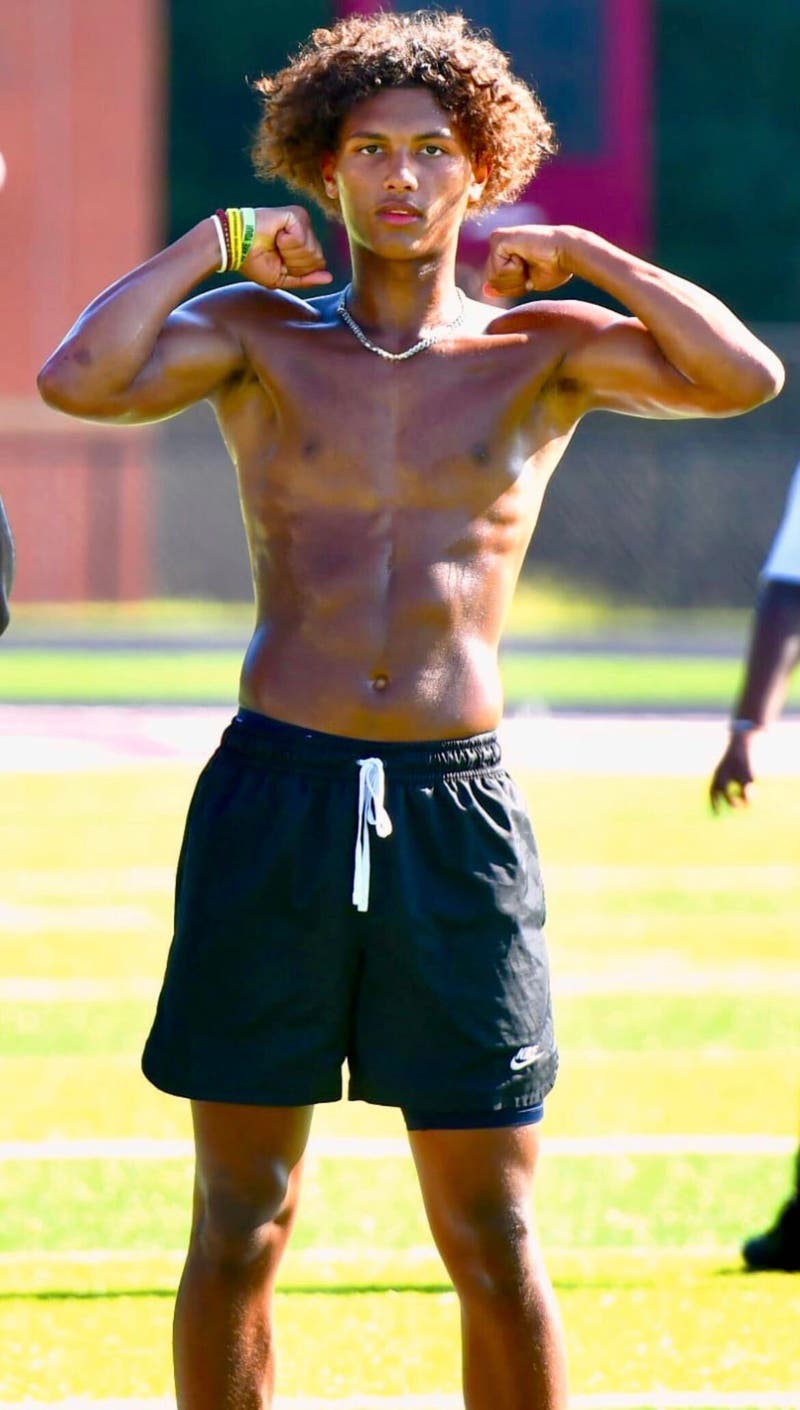
“It’s just so hard to believe,” Coach Taylor said. “You’re looking at him, and he looks healthy. Yeah, he’s been a little sick and tired. But surely, there’s no way that this can be real.”
By the time Avery and his father got to Dallas, midnight was approaching. Within the next 12 hours, Avery would have surgery to install a Mediport inside his chest, a lumbar puncture to collect a sample of his spinal fluid, and his first round of chemotherapy. But the most important treatment was the conversation he and his father had in the parked car. Avery had a choice. Would this diagnosis define his life, or would his response?
Avery had all the tools of a dominant high school football player – the size, speed, and intelligence. But work ethic was his most important quality. From a young age, he’d watched Cassie work the night shift, returning home from 12 hours saving lives at the hospital while everyone else was just waking up. Cordell had always given him chores, making him mow the lawn with a push mower – not one of those riding ones where you could glide over the grass without breaking a sweat. In high school, Avery worked for his dad in the oilfield, building valves, cleaning drills caked in black gold, and reorganizing hefty parts along the store shelves. And buried beneath all that oil, sweat, and calloused hands was a lesson Avery learned far younger than most kids.
“I need you to have some type of grit about yourself,” Cordell always told him. “Because life is going to throw you some tough tasks. Nobody has a smooth-sailing road. If they told you that, then that’s a lie.”
But Avery’s storm came much sooner and was far stronger than any parent ever could have wanted. And adding to the fear was the fact that Avery’s grandmother had died from cancer one week before his diagnosis, making the stakes of this battle so much clearer – and scarier. By the time of her funeral, Avery was already in the hospital getting treatment. So he and his mother watched his beloved Granny’s funeral on FaceTime, all the while feeling like she had passed the torch to Avery before he was ready.
The ensuing year was brutal. Avery constantly shuttled back and forth between Jefferson and Dallas, enduring an endless amount of tests, treatment, and illness. But the hardest part about cancer that no one talks about ishow it rips you away from everyone you love. Because his immune system was basically at zero, Avery had to be quarantined even at home. In the 48 hours after chemotherapy, his parents couldn’t even touch him without gloves on. If someone came to service the house, they had to wear a mask. Avery couldn’t go to any of the games, instead watching on YouTube from his hospital bed as his friends made memories without him, and as his girlfriend walked to the midfield line at homecoming court alone.
“I was really about to peak in my skill and strength-wise,” Avery said. “It all got crushed. I love watching my teammates succeed. Wishing I could be out there with them, doing the same thing right next to them, I’d say that was the hardest part.”
But all the while, his father’s words on the day of the diagnosis rang in his ears, his North Star in all the fog that cancer brought.
“It’s time to man up,” Avery said. “I don’t like to be super emotional. I like to take things on the chin, meet them head-on, and figure out, ‘How can we find a positive out of the situation?’”
If there was a positive of being removed from all his family and friends, it’s that the only person left to talk to was God. Avery attended church growing up. He’d even had Philippians 4:13 stitched on his letterman jacket a year before the diagnosis: “I can do all things through Christ who gives me strength” (NIV), a verse he didn’t know at the time how hard he’d have to lean on. But he admits he didn’t have a personal relationship with God until cancer forced him to. He began praying morning and night, and somewhere in those conversations he realized that God had woken him up by giving him a battle he couldn’t get through alone.
“I truly believe that out of all my children – or even myself personally – I couldn’t have handled everything that he’s handled with the grace he’s handled it with,” Cassie said. “If he did get down, it was for a split second. It’s just been a positive attitude throughout, and I truly think that’s made a difference.”
Avery and his family got to attend one game last year, Jefferson’s Week 5 game against Gladewater. They sat in the back end zone, far from other fans because of Avery’s immune system. But the Jefferson community still found a way to wrap its arms around them, dedicating the night to Avery’s fight as a fundraiser.The night was supposed to be a celebration, a chance for Jefferson to rally around their ill teammate by drubbing Gladewater as a heavy favorite in the district opener. But for one reason or another, whether it be the nerves of the moment or the plain finicky bounces of high school football, Jefferson fell 28-27 in one of the state’s most shocking losses.
“This isn’t Hollywood, because if it was, we would’ve won the game and carried Avery off the field on our shoulders,” Coach Taylor said. “We ended up losing to Gladewater by one point. If I’m being honest, I felt like we failed him. So that was a really difficult time. Probably the low point of my career as a head coach, to be honest.”
That loss derailed Jefferson’s season, which had begun with so much hype. The Bulldogs, a dark horse state championship pick in the preseason as the No. 4-ranked team, instead lost four of their next seven games and finished the year at 6-5, limping into the playoffs and losing in the first round. Avery’s cancer battle, and his removal from the team, affected Jefferson as much as it did their teammate. How could they play football with their heart ripped out of their chest, fighting blood cancer in a Dallas hospital room?
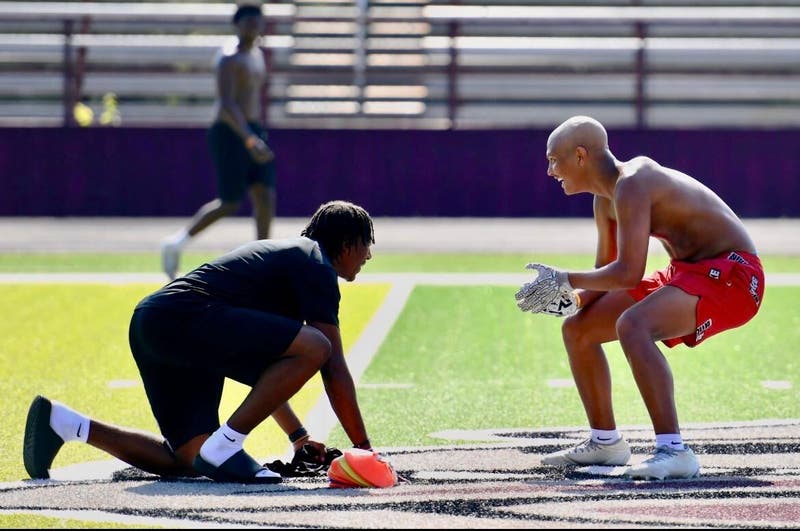
Whether because he knew how much his team needed him, or because he knew how much he needed this team, Avery recovered enough to play on Jefferson’s 7-on-7 team by May 2026. By this point, his signature curls had fallen out, and he had to play with a drawstring backpack full of medicine that was fed through a tube that ran all the way to the mediport in his chest.
“I was out there running routes with a needle in my chest,” Avery said. “It could’ve gotten pulled out at any moment.”
It was a fragile line between safety and harm, but Avery had lived and fought on that tightrope for a year. And just like in the hospital room, Avery approached the challenge without fear. That day, he caught a contested two-point conversion – while the defender got called for pass interference, he might add – that helped send Jefferson to the State 7-on-7 Tournament in College Station. It was a movie moment, setting up Avery’s triumphant return to the field at the biggest offseason event. But, as Coach Taylor said, this is not Hollywood, and life is never that simple.
After the state qualifying tournament, Avery and his mother returned to Dallas for another chemo treatment. After the chemo drip was set, Avery fired up a video game. For the past year, he had only been able to talk to his friends online while they all played together. Knowing how long these sessions could last, Cassie went downstairs to get them some food. But when she returned, Avery was already off the game.
“I’m just gonna eat now,” Avery said.
But when he spoke, the words were garbled, almost to the point where Cassie couldn’t understand. Then, Avery said he’d gotten off the game because he kept stuttering. As he ate, his speech got worse. He knew what he wanted to say, but his mouth couldn’t form the words.
“Avery, repeat after me,” Cassie said. “You can’t teach an old dog new tricks.”
Avery paused, opened his mouth briefly, then closed it. By now, he couldn’t even say ‘mom’ or ‘dog.’ Then, whether as a defense mechanism, out of fear, or out of genuine amusement, he started laughing.
“Avery, if you’re playing, do not play like that,” Cassie said. “But if you’re serious, you need to push the button to call the nurse.”
Avery pushed the button.
When the nurses flooded in, Avery could only communicate by shaking his head. He had a searing headache, but he could only convey it by grabbing his mom’s hand and putting it on his forehead. He followed the nurses into the CT scan room. But soon after the scan, the entire left side of Avery’s body started going limp. It quickly transferred to his right side, and Avery couldn’t even walk back up to the hospital room anymore. The nurses had to get him a wheelchair instead.
The nurses told Cassie this could be a temporary neurological side effect of the chemotherapy. They were exceptionally calm, whether because they genuinely weren’t concerned, or because they were trying not to freak the family out. But Cassie’s mind was already flashing back to the blood panel she’d seen a week before Avery’s diagnosis, the one that showed his platelet count at dangerously low levels. Platelets form clots and stop bleeding when a blood vessel is injured. If Avery didn’t have enough, he could’ve suffered a hemorrhagic stroke.
The next morning, Avery’s symptoms had slightly improved, ruling out a stroke. Over two weeks, he slowly regained his strength. On the outside, the only hints of what happened are that Avery stutters a little more than he used to. But the setback still left internal scars for Avery and his mother, the fear refusing to subside even after the danger passed.
And yet, after he went into remission, the family never doubted whether Avery would play football his senior year. Like every kid, he could get hurt. But Cassie would regret much more holding him out after all he’s overcome.
“I knew it was something he’d regret for the rest of his life, not being able to play his senior year,” Cassie said. “We kind of feel like we already had a year of high school stolen. And, like I’ve told him many times before, when you’re older, you’re going to look back on high school as some of the best years of your life.”
Avery got his mediport removed on Friday, September 11, the day of Jefferson’s game against Gunter. The mediport was the final hurdle Avery had to clear before returning to the field. But understandably, Coach Taylor and the staff were hesitant to put him back in. The following week against Texarkana Liberty-Eylau, Taylor had Avery play in two special teams plays to ease him back in. He didn’t put him at wide receiver until eight minutes left in the fourth quarter. With Jefferson already leading 35-0, it was a low-stress moment for Avery to get his feet wet.
Jefferson dialed up a quick screen pass to Avery. This was his statement moment, the climax of his journey back to the field. He’d catch the ball, score a touchdown, get carried off the field, and end up on SportsCenter.
But at this point, no one needs reminding, much less Avery Lawson, that this is not Hollywood. Instead, the pass was thrown high, through Avery’s extended hands. One of Jefferson’s offensive linemen, sprinting out into the flat to block for his teammate – his effort certainly at an all-time high given the moment’s magnitude – blocked a Liberty-Eylau defender so hard that the defender was pushed back into an official’s lap. The kid’s helmet grazed the referee in the jaw and knocked him unconscious. Given the lopsided score, the teams agreed to call the game.
After sitting out for over a year, Avery would have to wait another week.
“After the game, I sat back and talked to my parents and realized that maybe it wasn’t my time to get out there,” Avery said. “I just needed to wait a little bit longer.”
That perspective and wisdom may be the biggest change Cordell and Cassie have seen in their son. At home, Avery used to be a rambunctious kid, constantly dancing and belting out the words to his favorite songs on the radio. But Coach Taylor says Avery is calm and reserved, a soothing presence in a locker room full of big personalities. Avery used to ride the emotional highs and lows like his friends. But after the last year, he is steady, his eyes fixed on what matters most: his family, his character, and his relationship with God.
“In a way, it’s forced him into being more mature than he would’ve been at this age,” Cassie said. “He grew up faster, whether we wanted that or not.”
Avery finds it hard to describe the emotions he felt when he finally made that first catch against Pittsburg last week. As he brought the ball in and heard the crowd roar louder than it had all night, he felt caught somewhere between who he was as a sophomore and who he is now as a senior. In the hospital, two visions carried him through the chemotherapy. One was the memory of playing football the year before, and the other was the daydream of what it would be like to play again. There’s not really a word in the English language for what it’s like to experience both a memory and a dream at the same time. No feeling is quite like getting to do something you love after you thought you’d never be able to again.
“We all take so much for granted,” Coach Taylor said. “We’re so impatient. We want things now. We’re ungrateful. Whenever you have a story like Avery’s, we should all have a ton of gratitude for what we have.”
Cassie knows there are many messages and themes you can take from her son’s story. Gratitude is a great one. Awareness is another. Far more research exists on adult cancers than on childhood forms. Most of Avery’s chemo treatments were approved in the 1980s. But, above all, Cassie hopes that Avery’s story is one of hope, that we are all stronger than we believe we are, just like her son.
“I want to give people hope who may be going through some type of traumatic cancer or illness,” Cassie said. “It is possible to come through it, and not only come through it, but beat the crap out of it.”